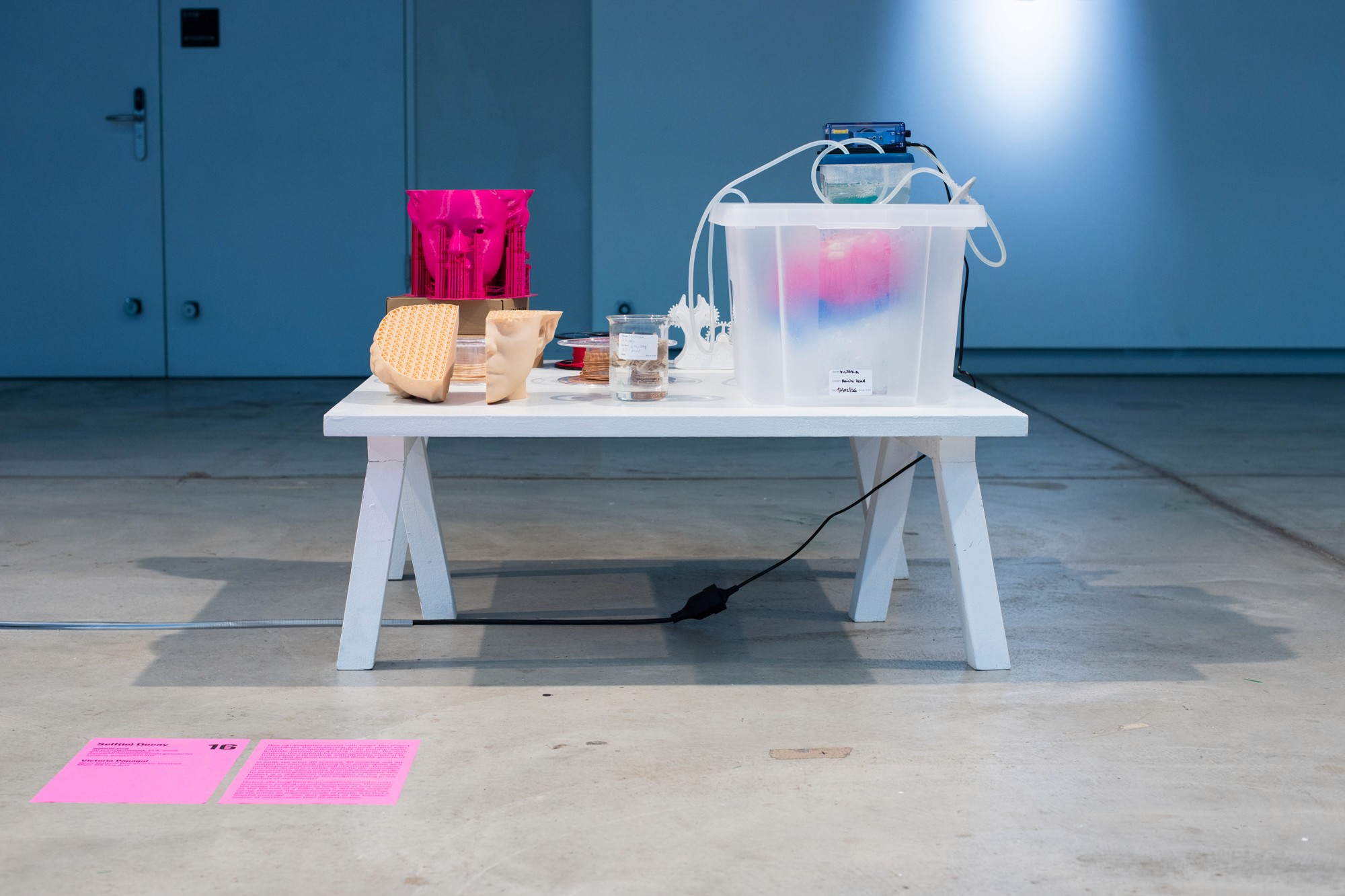
full instalation view
Date
Author
Victoria Papagni
Duration
autumn semester 2025
Category
Biolab
installation
mycelium composite
PLA
wood filament
growlay
Self(ie) Decay
How can bioplastics coexist with fungi? This project investigates the relationship between digital fabrication – more specifically FDM 3D printing, biodegradable material and growing organisms. The work explores the contrast between organic life and synthetic plastics by working with 3D prints made of filaments that become porous and allow the growth of microorganisms.
In 2018, the artist 3D scanned, 3D modeled, and 3D printed her own head, placing it in public space as a contemporary narcissistic self monument. The sculpture finds its end in a public space for the restoration of monuments, where many severely damaged sculptures lie on the ground and will never be repaired. This project is a speculative continuation of this storytelling. What happened to the sculpture laying in this cemetery of monuments?
Historically, fungi have been negatively coded in western culture, evoking rot and decomposition. Therefore, the image of a face eaten by fungi may at first appear as the portrait of a fallen hero, a decaying magnificense. However, the unexpected continuation of fungal life within an organism made of plastic is in fact a hopeful message – one that speaks of the transformation of matter rather than its destruction.
2
growth development
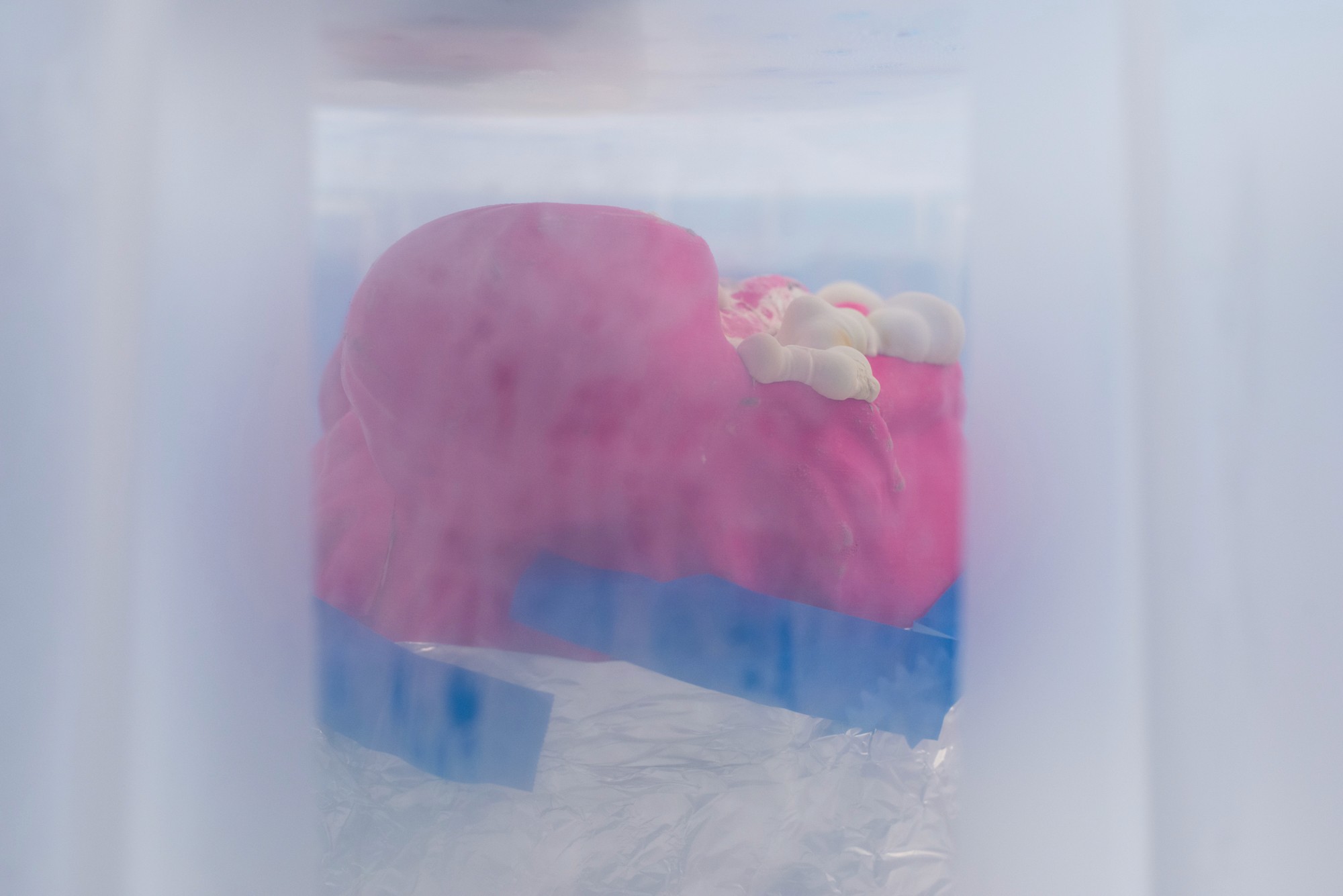
Filling the 3D-printed head with a substrate blend of 90% hardwood sawdust and 10% Ganoderma reishi grain spawn. The mycelium is then incubated at room temperature in a high-humidity environment (around 90%) for two months, allowing the structure to fully colonize and grow fruiting bodies.

Sources
Photos 1, 2: © ZHdK, Nadine Schütz
Photo 3-8: © Victoria Papagni